Why Your Monitoring Data Shouldn't Leave the EU
Schrems II, the CLOUD Act, NIS2, DORA — why your uptime monitoring data is GDPR-relevant and what EU-only hosting actually buys you.
When people think about sensitive data, they think about customer databases, payment information, health records. Monitoring data rarely makes the list.
That’s a mistake.
Your uptime monitoring data contains a surprisingly detailed picture of your infrastructure — and if it leaves the EU, you might be exposing more than you think. This piece walks through the legal framework (Schrems II, the CLOUD Act, NIS2, DORA), then turns it into a concrete checklist you can run against any monitoring vendor.
What Monitoring Data Actually Contains
Let’s look at what a typical monitoring tool collects about your business:
Infrastructure map: Every URL you monitor reveals your service architecture. API endpoints, admin panels, staging environments, internal tools. Anyone with access to your monitoring config knows exactly what your stack looks like.
Uptime patterns: When does your service go down? How long does it take to recover? What’s your real uptime? This is competitive intelligence. For a SaaS business, uptime data is a direct indicator of operational maturity.
Response times: Performance trends reveal capacity issues before they become outages. If someone knows your P95 response time is creeping up on Thursdays, they know when you’re most vulnerable.
Incident history: Every incident tells a story: what broke, when, how long it took to fix, and how many times it’s happened before. This is operational intelligence.
Alert configurations: Who gets alerted, through which channels, and for what? This reveals your team structure, your on-call setup, and your communication channels.
SSL and certificate data: Certificate expiry dates, issuer information, chain of trust — details about your security infrastructure.
This isn’t abstract. This is a detailed profile of your business’s technical operations.
What Is Actually in a Monitor Record?
To make the GDPR analysis concrete, here is the typical contents of a single monitor and its associated records on any mainstream uptime platform:
- Monitor URL and method — full URL, including any query parameters or path tokens. Often reveals internal service names.
- Response body samples — most tools truncate at 1–10 KB, but the truncated slice still routinely contains usernames, account IDs, support ticket numbers, and partial session data when a failing endpoint leaks them.
- HTTP metadata — status codes, headers (including
Set-Cookie,X-Request-ID,Server), TLS version, certificate chain, and response timings. - Timestamps and check cadence — minute-precision history of when your service was up and down, broken out by probe region.
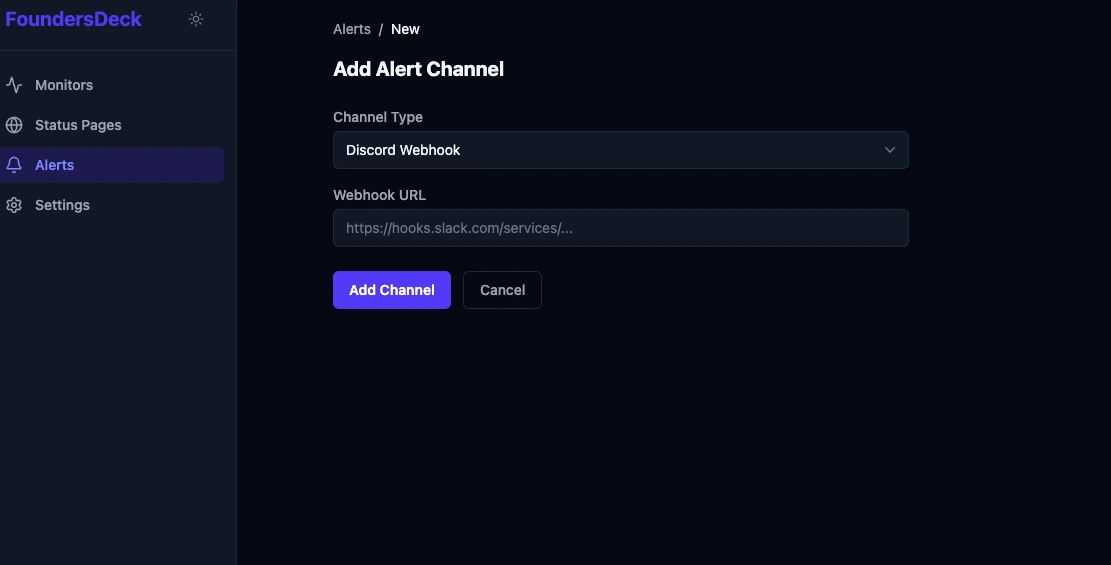
- Alert targets — email addresses, phone numbers, Slack user/channel IDs, Microsoft Teams webhook URLs, Discord webhook URLs, PagerDuty routing keys. These are tied to identifiable natural persons.
- Incident notes — free-text annotations written by responders, often naming colleagues, customers, or affected accounts.
- Audit logs — who logged in, who acknowledged an alert, who edited a monitor. Tied to user accounts.
Even if you argue that monitor URLs and HTTP metadata are not personal data on their own, the alert-target list, incident notes, and audit logs unambiguously are. Article 4(1) of the GDPR (Regulation (EU) 2016/679) defines personal data as any information relating to an identified or identifiable natural person. A list of on-call engineers and their alert preferences meets that test. Your monitoring vendor is, therefore, a processor under Article 28 — and the transfer rules in Chapter V apply.
What Happens When This Data Leaves the EU
When you use a US-based monitoring tool (Pingdom, BetterStack, Datadog) — or an EU-owned one running on US infrastructure, like UptimeRobot — all of this data is stored on US infrastructure, controlled by a US company or its US sub-processors. Here’s what that means legally.
The CLOUD Act
The US CLOUD Act (Clarifying Lawful Overseas Use of Data Act) requires US companies to hand over data to US law enforcement on request — regardless of where the data is stored. An EU data center doesn’t protect you if the company is American. The reach is corporate, not geographic: it follows the legal entity, not the bytes on disk.
Schrems II: the legal anchor everyone references and few read
The 2020 Schrems II ruling — formally Case C-311/18, Data Protection Commissioner v Facebook Ireland Ltd and Maximillian Schrems — is the legal anchor behind the “EU monitoring” argument. The Court of Justice of the European Union (CJEU) did three things at once.
It invalidated the EU-US Privacy Shield outright. It ruled that Standard Contractual Clauses (SCCs) remain valid only where the importer’s country offers protection essentially equivalent to EU law — and held that US surveillance law (Section 702 FISA, Executive Order 12333) does not meet that standard. And it placed the burden of proof on the data exporter: you, the EU controller, must show the transfer is lawful on a case-by-case basis.
The European Data Protection Board followed up with Recommendations 01/2020 on measures that supplement transfer tools, which formalised the Transfer Impact Assessment (TIA) and listed the technical, contractual, and organisational measures an exporter must layer on top of SCCs when transferring to a third country with surveillance risk.
For monitoring data, the awkward truth is that the most effective supplementary measure — end-to-end encryption where the importer cannot read plaintext — is structurally incompatible with the service. The vendor must read response bodies to detect failures, send alerts to identifiable persons, and render incident notes in a UI. No useful TIA lands on “we’ve encrypted everything the vendor needs to operate.” Years after Schrems II, the simplest path remains: don’t transfer.
FISA Section 702
The Foreign Intelligence Surveillance Act allows US intelligence agencies to conduct programmatic surveillance on non-US persons’ data held by US companies. Your monitoring data could be swept up in bulk collection programmes — PRISM and Upstream are the two best-documented — without any specific warrant or probable cause directed at you. Section 702 was reauthorised in April 2024 for another two years, so the legal exposure here is not a historical artefact.
AWS Frankfurt vs Hetzner Nuremberg: an honest comparison
The most common counter-argument is: “We use AWS Frankfurt, the data stays in Germany.” That is true for residency. It is not true for jurisdiction. Below is what each option actually buys you for monitoring-data hosting.
| Provider | Operating entity | CLOUD Act reach | EU SCCs required | Recommended for monitoring data |
|---|---|---|---|---|
| AWS Frankfurt (eu-central-1) | Amazon Web Services, Inc. (US) and Amazon Web Services EMEA SARL (LU) | Yes — US parent is compellable under 18 U.S.C. § 2713 | Yes, for any sub-processor outside the EU/EEA | Only with strong supplementary measures and a documented TIA |
| Hetzner Nuremberg (or Netcup, OVH, Scaleway) | EU-incorporated GmbH / SAS / BV, controlled and audited under EU law | No — outside the personal jurisdiction of US courts | No — transfer rules do not apply | Yes — preferred default for EU controllers |
This is not a sales argument against AWS. AWS Frankfurt is a legitimate choice for plenty of workloads. It is a poor choice when the workload is itself a record of who reacts to your incidents, when, and how often — because the legal cost of defending that transfer is disproportionate to the technical benefit of being on AWS.
The Practical Risks
Beyond legal compliance, there are practical risks:
Competitive intelligence: A government agency or bad actor with access to your monitoring data knows your infrastructure, your weak points, your recovery times, and your technical capabilities.
Supply chain mapping: Your monitoring URLs reveal your vendors, your dependencies, and your integration points. This is valuable for supply chain attacks.
Incident exploitation: Knowing when a company is experiencing issues — in real time — is valuable information for competitors, short sellers, or threat actors.
NIS2 and DORA: when EU jurisdiction stops being optional
For most SaaS founders, the GDPR analysis above is the binding constraint. For anyone selling into regulated sectors — energy, transport, banking, healthcare, digital infrastructure, ICT service management — two further regimes apply, and they push the answer harder toward EU-incorporated vendors.
NIS2 Directive (EU) 2022/2555, in force since January 2023 and transposed across member states through 2024–2025, requires essential and important entities to implement cybersecurity risk-management measures under Article 21. Paragraph 2(d) specifically calls out “supply chain security, including security-related aspects concerning the relationships between each entity and its direct suppliers or service providers.” A monitoring vendor is a direct supplier. Auditing one based in the EU, governed by EU contract law, with a named DPO and an EU establishment, is materially cheaper to evidence than auditing one based in San Francisco that points you at a generic Trust Centre PDF.
DORA Regulation (EU) 2022/2554, applicable to financial entities from 17 January 2025, is stricter still. Chapter V requires a register of all ICT third-party service providers, contractual minimums for ICT risk management, and concentration-risk analysis when too much of your stack lives with one provider or one jurisdiction. The lead supervisory authority for ICT third-party risk sits with the European Supervisory Authorities. Using a US-incorporated monitoring vendor is not prohibited, but it is the kind of cross-border, third-country dependency that DORA assessors will ask you to justify. Picking an EU-incorporated vendor removes the question.
“But We’re Just a Small Startup”
Fair point — nobody is targeting your 5-monitor setup specifically. But the laws don’t distinguish between small and large. The CLOUD Act applies to all US companies equally. GDPR applies whether you have 5 or 500,000 users. And the monitoring tool you choose today may still be processing your data when you’re handling thousands of customers, or when you sign your first regulated enterprise customer who runs a DORA-flavoured vendor questionnaire at you.
Building on EU infrastructure from day one means you never have to migrate later.
A Vendor-Selection Checklist for EU Buyers
Run these questions before signing anything. The first six are non-negotiable.
- Legal entity and jurisdiction. Full legal name, country of incorporation, registered address. Look for an EU/EEA GmbH, SAS, BV, OY — not a US LLC with a European sales office.
- Named sub-processor list. Current, public, with entity names, countries, and purpose. Gated behind a sales call is a red flag.
- EU-only vs SCC posture. Does the vendor commit contractually to EU-only sub-processors, or fall back to SCCs and a TIA? “EU region available” is marketing, not contract.
- CLOUD Act exposure statement. Ask in writing whether the operating entity, parent, or any controlling entity is subject to the CLOUD Act, FISA 702, or EO 12333.
- DPA available without a sales call. A real Article 28 DPA, downloadable as PDF. Bonus points if pre-signed.
- Data export and portability. Monitor configs, check history, incident logs exportable in JSON or CSV at any time, without contacting support.
- Retention controls. Configurable retention for check data, response bodies, and incident records. Default-forever is a compliance smell.
- Audit logs. Admin actions logged with actor, timestamp, IP — and exportable.
- Sub-processor change notifications. Article 28(2) requires prior notice with a right to object. Is that operationalised, or buried in ToS?
- Breach notification SLA. The GDPR 72-hour clock starts when you become aware; a 72-hour vendor SLA leaves you with zero time.
- Encryption posture. At-rest encryption and key management, clearly documented.
- EU choice-of-law clause. Disputes governed by an EU member state’s law, venue in an EU court. Delaware or California clauses contradict the rest of the pitch.
If a vendor cannot answer eight or more without scheduling a call, replace them.
What You Can Do
The checklist above is the long version. The short version is five moves:
- Choose monitoring tools from EU companies — not US companies with EU data centers. Our guide to GDPR-compliant monitoring tools lists current options.
- Verify actual data residency — “EU region available” is not “EU only.” Ask where the company is incorporated, not just where the servers are.
- Check the sub-processor list — does it route through US-based analytics, logging, or infrastructure?
- Download the DPA before you sign — if you have to schedule a sales call to get one, that is a red flag.
- Consider self-hosted — tools like Uptime Kuma let you run monitoring on your own EU infrastructure.
The Bigger Picture
Data sovereignty isn’t just about compliance. It’s about control. When your monitoring data lives on US infrastructure, you’ve handed over a detailed map of your business to a jurisdiction that can legally access it without telling you. Schrems II made the legal answer plain. The CLOUD Act made the technical answer plain. NIS2 and DORA make the procurement answer plain.
For EU founders building products that handle customer data, this matters. Your monitoring tool is part of your trust story. And increasingly, European alternatives exist that let you tell that story with confidence.

Engin Yildirim
Founder of FoundersDeck. 13+ years in software engineering. Building EU-first tools for founders.
Read more about me →